Capture Between Meetings
One shortcut saves the idea before the next call erases it.
For Founders
Customer calls, strategy notes, and mid-walk ideas go in with one shortcut. Mindly connects them into one searchable system, so every decision starts with everything you know.
What you get
Customer calls, strategy threads, and shower thoughts get captured in seconds and stay connected without maintenance.
One shortcut saves the idea before the next call erases it.
Ask what customers said, what you decided, and why, and get answers from your own history.
The mind map links product, fundraising, and customer notes so the big picture stays assembled.
Everything is tagged and summarized on save. The system holds up precisely when you have no time for it.
Founder setups
Capture every customer call, sales conversation, support thread, and review into one feed. AI tags by topic and segment automatically, so the question of what customers actually want gets a real answer in one query instead of a half day of cross-referencing your own memory.
Save market reports, competitor launches, pricing pages, and analyst notes as you find them. The mind map shows where the moves overlap with your plans, and the quarterly market review becomes a short walk through the library rather than a scramble.
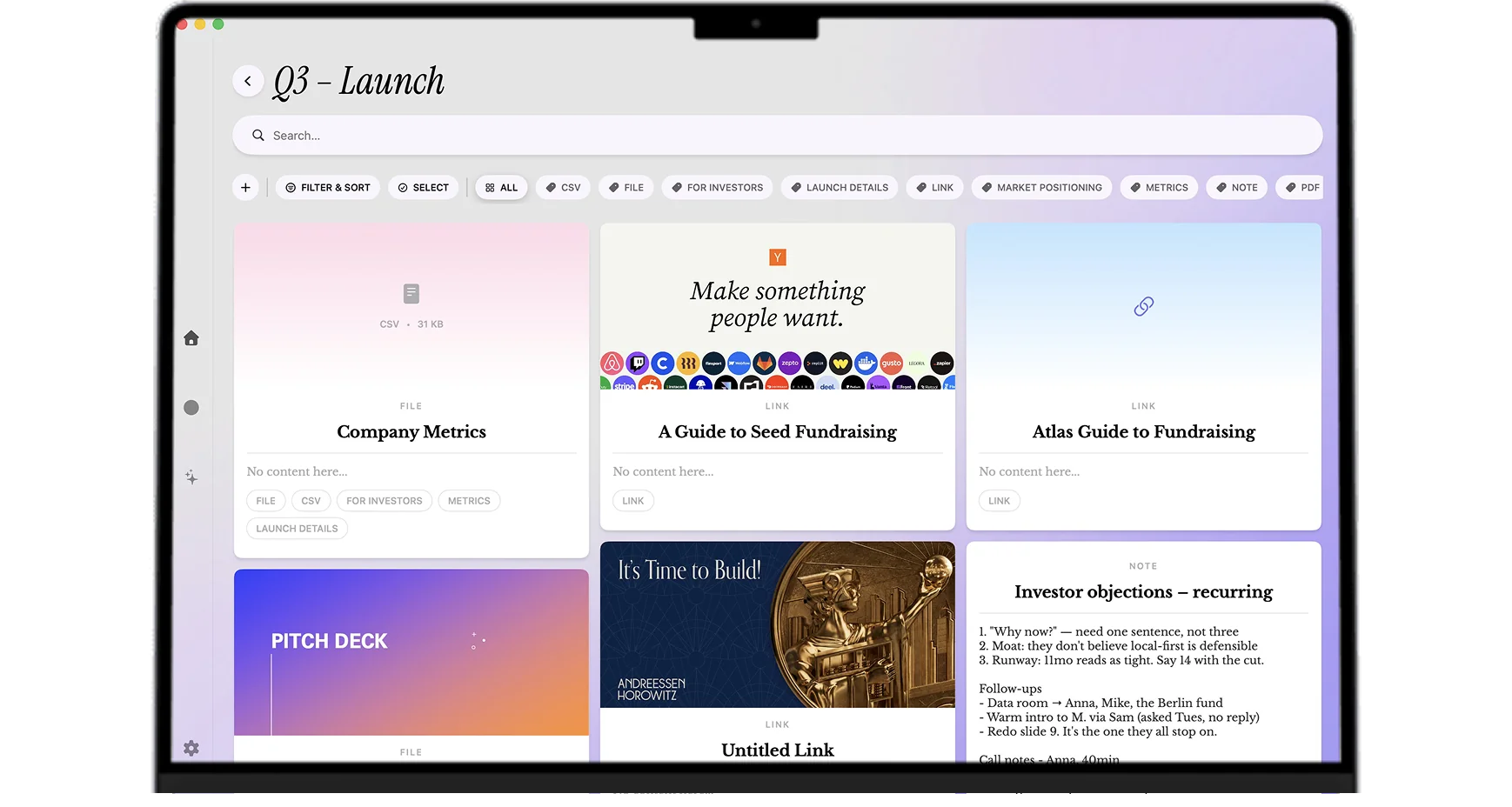
Keep pitch deck iterations, the data room documents, investor feedback, and your running list of questions in one Space. When an investor asks for a number or a customer story, it is one search away, and each raise leaves a record you can reuse for the next one.
Draft strategy memos and decision rationale inside Mindly with the customer evidence and market context one shortcut away. The decision and the reasoning behind it are written down and searchable, so future you knows why a call was made.
Record a voice memo right after an investor meeting, an advisor call, or a customer conversation while it is fresh. The transcript and summary make the writeup nearly automatic, and action items get due dates with macOS reminders so commitments actually get done.
Save the essays, threads, and books worth keeping, and let AI summarize and connect them. The advice that applies to the problem you are facing this week resurfaces when you search for it, instead of being lost in a pile of bookmarks.
Common questions
For founders who want one private library that holds customer calls, market research, strategy, and fundraising materials, and who need to make decisions backed by real evidence, Mindly is a strong fit on Mac in 2026. The advantages are that AI organizes every format automatically, voice memos capture the thinking between meetings, you can chat with any document, and the whole library stays on your own machine.
Notion and team wikis are built for shared, structured documents that the whole company edits. Mindly is the personal layer underneath that: the founder own evidence and thinking, captured in any format and organized automatically. Most founders keep a team workspace for shared docs and use Mindly as the private library where customer signal, market research, and strategy thinking accumulate and inform what eventually goes into the shared tools.
Yes. Capture call recordings, transcripts, support threads, and survey results, and Mindly tags them by topic and segment automatically. Semantic search means a question like what have customers said about onboarding returns the right moments across every call and document together, even when the wording differs, so patterns across customers surface without you having to remember every conversation.
Your library lives in a folder on your Mac, not a vendor cloud. AI processing runs over encrypted channels and is not retained on Mindly servers after the request. For most founder confidentiality needs, the on-device library plus no-retention AI is the right structural answer. For anything bound by a specific agreement or regulation, check the privacy policy and your own obligations before running identifiable data through cloud AI.
Yes. Open any PDF, report, or long transcript and chat with it. The AI answers in the context of that document, so you can ask a market report what it concludes or a contract what a clause means without reading every page, and context recognition surfaces the related material you have saved.
Go deeper
The full playbook behind this page: the reasoning, the habits, and answers to the questions this page does not cover.
Read the guideCapture calls, notes, and ideas in one shortcut. Mindly tags, files, and connects them for you. Free to start on macOS.